

Why the First 6 Months After ERP Go-Live Define Your Business ROI – Expert Insights for Saudi Businesses
ERP implementation is a major financial commitment. But go-live is not where ROI begins. In Saudi Arabia’s rapidly evolving regulatory and digital transformation landscape, the first 6 months after ERP go-live define your business ROI more than the implementation phase itself.
Many companies in Riyadh, Jeddah, and Dammam assume that once the system is operational, value is automatic. That assumption is costly. In reality, the first 6 months after ERP go-live define your business ROI, operational efficiency, compliance strength, and leadership visibility.
If this period is managed strategically, ERP becomes a competitive advantage. If ignored, it becomes an expensive reporting tool.
What Happens Immediately After ERP Go-Live?
ERP go-live means the system becomes the primary operational backbone for:
- Financial accounting
- Inventory control
- Procurement management
- VAT compliance
- E-invoicing (ZATCA Phase 1 & Phase 2)
In Saudi Arabia, regulatory compliance is not optional. Businesses must align with:
- Zakat, Tax and Customs Authority (ZATCA) requirements
- E-invoicing mandates
- VAT regulations
- IFRS reporting standards
The first 90–180 days after deployment expose:
- Data inconsistencies
- Workflow inefficiencies
- User adoption challenges
- Reporting inaccuracies
This is exactly why the first 6 months after ERP go-live define your business ROI.
Why the First 6 Months After ERP Go-Live Define Your Business ROI in KSA
1. User Adoption Determines System Value
An ERP system delivers ROI only when employees fully integrate it into daily operations.
If finance teams export reports to Excel, if warehouse teams bypass stock controls, or if compliance officers manually adjust VAT entries, ROI declines immediately.
Saudi companies undergoing digital transformation under Vision 2030 must ensure structured user discipline. Platforms like
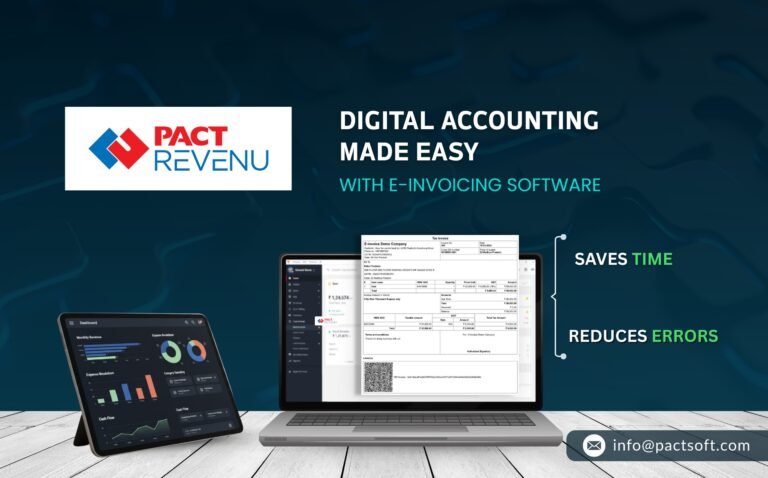
PACT REVENU
support post-go-live governance with:
- Automated VAT validation
- ZATCA-compliant e-invoicing workflows
- Real-time dashboards
- Error detection alerts
Without strong adoption in the first six months, the system’s value erodes.
2. ZATCA Compliance Directly Impacts Profitability
Saudi Arabia enforces strict VAT and e-invoicing compliance.
Authoritative source: Zakat, Tax and Customs Authority
Non-compliance can result in:
- Financial penalties
- Audit scrutiny
- Operational disruptions
- Reputational damage
During the first six months, businesses must validate:
- E-invoice XML accuracy
- VAT calculation correctness
- Real-time reporting compliance
- Integration stability
This is why the first 6 months after ERP go-live define your business ROI in Saudi Arabia — because compliance errors directly reduce profitability.
3. Data Stabilization Drives Strategic Decisions
Post go-live, companies often discover:
- Incorrect opening balances
- Duplicate supplier records
- Cost center misalignment
- Inconsistent inventory data
If leadership makes decisions based on unstable data, ROI weakens.
When data integrity is stabilized within six months, organizations gain:
- Reliable financial reporting
- Accurate profitability analysis
- Stronger cash flow forecasting
- Better procurement planning
This creates measurable ROI.
Key Metrics Saudi Businesses Must Monitor
Financial Indicators
- Month-end closing duration
- VAT accuracy rate
- Zakat calculation consistency
- Budget vs actual variance
Operational Indicators
- Inventory turnover ratio
- Warehouse accuracy rate
- Procurement cycle efficiency
- Order fulfillment time
Compliance Indicators
- ZATCA e-invoicing validation rate
- Audit readiness score
- Tax filing error reduction
- Internal control adherence
Monitoring these ensures the first 6 months after ERP go-live define your business ROI positively.
Common Mistakes Saudi Companies Make After ERP Go-Live
- Treating go-live as project completion
- Delaying ZATCA compliance validation
- Insufficient staff retraining
- Weak executive KPI monitoring
- Ignoring system optimization opportunities
ERP without structured oversight does not produce ROI.
Strategic Framework to Maximize ROI in Saudi Arabia
30-60-90 Day Reviews
Evaluate:
- User adoption metrics
- VAT & e-invoicing accuracy
- Financial report consistency
- Workflow bottlenecks
Continuous Compliance Monitoring
Saudi regulatory updates require constant alignment. Automated validation tools reduce human dependency and compliance risk.
Executive Dashboard Accountability
When CFOs and CEOs actively monitor ERP-driven KPIs, ROI accelerates.
Solutions like PACT REVENU support Saudi organizations with statutory dashboards, ZATCA-aligned reporting, and automated compliance alerts designed for KSA requirements.
Conclusion
ERP implementation is a strategic investment. ROI is earned through discipline.
In Saudi Arabia’s regulated and rapidly digitizing economy, the first 6 months after ERP go-live define your business ROI because this period determines:
- Compliance reliability
- Data accuracy
- Operational efficiency
- Financial visibility
Go-live is not the finish line. It is the beginning of measurable performance.





 EN
EN  AR
AR