
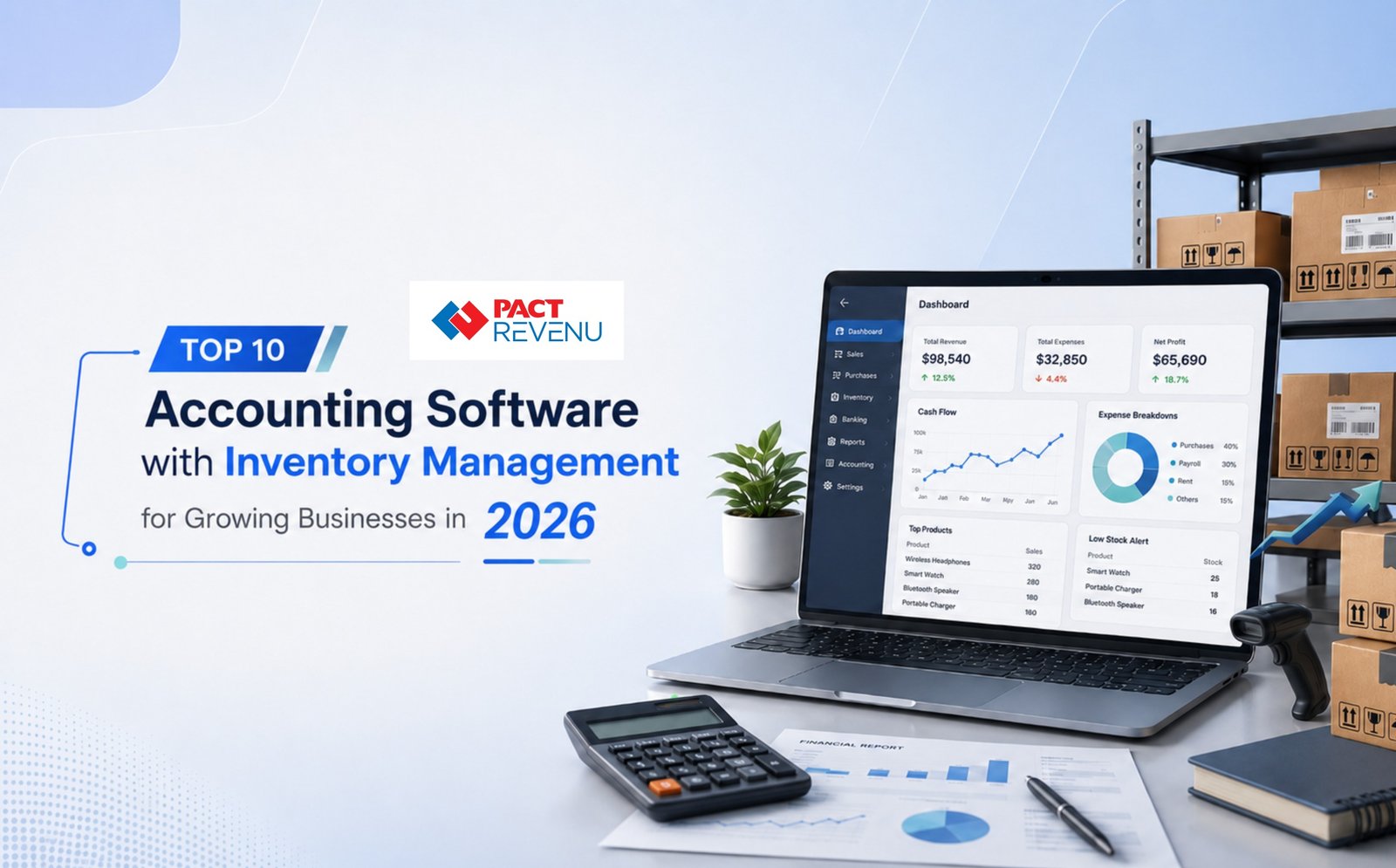
Top 10 Accounting Software with Inventory Management in Saudi Arabia for Growing Businesses in 2026
Managing a growing business in Saudi Arabia involves more than recording sales, expenses, and payments. As operations expand, businesses need to manage accounting, inventory, purchasing, sales, customer receivables, supplier payments, warehouses, VAT-related transactions, e-invoicing processes, cash flow, and financial reporting.
For many growing businesses, the real challenge begins when these activities are managed through disconnected systems.
The finance team may use برامج المحاسبة, while the warehouse team depends on spreadsheets. Sales teams may track orders separately, and management may wait for manually prepared reports to understand the company’s current performance.
This disconnected approach can lead to stock mismatches, repetitive data entry, delayed reporting, limited cash flow visibility, and difficulty controlling multiple branches or warehouses.
This is why many businesses are searching for the best accounting software with inventory management in Saudi Arabia.
An integrated solution connects accounting with inventory, purchasing, sales, warehouse operations, and business reporting. For companies with more complex requirements, an ERP platform can connect these functions with CRM, manufacturing, payroll, procurement, and other operational processes.
This guide explores common business challenges and compares 10 accounting and inventory management software solutions for growing businesses in Saudi Arabia in 2026.
Why Do Saudi Businesses Need Integrated Accounting and Inventory Management?
Businesses operating in trading, wholesale distribution, retail, manufacturing, construction supply, food distribution, and other inventory-driven sectors need accurate information to make daily decisions.
As transaction volumes increase, spreadsheets and disconnected systems become difficult to manage.
Common challenges include:
- Differences between recorded and physical stock
- Duplicate transaction entries
- Limited visibility across warehouses
- Delayed financial reports
- Excess or slow-moving inventory
- Difficulty monitoring customer receivables
- Limited branch-level visibility
- Poor understanding of current cash flow
Integrated accounting and inventory management software can connect these processes and provide better visibility across financial and operational activities.
Problem 1: Stock Records Do Not Match Physical Inventory
One of the most common challenges for inventory-based businesses is inaccurate stock information.
The system may show that a product is available while the warehouse has already run out of stock. In other situations, inventory may be physically available but not correctly recorded in the system.
These differences can happen because of delayed entries, missed stock transfers, sales returns, purchase returns, damaged products, or manual data-entry errors.
Incorrect stock information can affect sales, purchasing, customer service, warehouse operations, and financial reporting.
Solution: Connect Inventory with Business Transactions
Integrated accounting and inventory management software connects stock-related activities with sales, purchases, returns, and warehouse movements.
Depending on the system and business requirements, teams can monitor:
- Available inventory
- Warehouse-wise stock
- Stock movements
- Inventory valuation
- Product performance
- Slow-moving stock
- Purchase requirements
- Stock transfers
Better inventory visibility helps businesses make more informed purchasing, sales, and warehouse decisions.
Problem 2: Teams Enter the Same Information Multiple Times
In businesses using disconnected applications, a single transaction may be entered into multiple systems.
The sales team records an order. The accounts department enters the financial transaction separately. The warehouse team updates another record after dispatch.
This creates repetitive work and increases the possibility of mistakes.
Solution: Integrated Business Workflows
An integrated ERP platform connects related business processes.
When transactions are recorded through connected workflows, authorized teams can work with consistent information according to defined controls and approvals.
This reduces repetitive data entry and improves coordination between finance, sales, procurement, inventory, and warehouse teams.
Problem 3: Limited Visibility into Cash Flow
Strong sales do not always result in healthy cash flow.
A business may experience working capital challenges because customers delay payments, too much money is invested in slow-moving inventory, unnecessary purchases are made, or management reports are delayed.
When accounting and inventory information are managed separately, it becomes harder to understand how inventory and purchasing decisions affect working capital.
Solution: Connected Financial and Inventory Reporting
Integrated accounting and inventory management can provide visibility into:
- Cash flow
- Customer receivables
- Supplier payables
- Inventory valuation
- Stock ageing
- Sales performance
- Purchase trends
- Product profitability
- Branch performance
Connected reporting helps management understand how operational decisions affect financial performance.
Problem 4: VAT and E-Invoicing Processes Require Better System Control
Businesses operating in Saudi Arabia need accounting systems that support their applicable taxation and invoicing requirements.
As transaction volumes increase, relying on manual processes can create additional administrative work and increase the possibility of inconsistent records.
Businesses should evaluate whether their accounting or ERP solution can support applicable VAT processes, electronic invoicing workflows, transaction records, and reporting requirements.
Solution: Use an Integrated System Designed for Modern Business Processes
Businesses should select software that can support their accounting, inventory, invoicing, and reporting requirements through connected workflows.
The exact configuration required depends on the business, its activities, transaction volumes, and applicable regulatory requirements.
Companies should always verify current compliance requirements and confirm the suitability of their software configuration before implementation.
What Should Businesses Look for in Accounting Software with Inventory Management?
Choosing business software should not depend only on price or popularity.
Growing Saudi businesses should consider whether the system can support current operations and future expansion.
Real-Time Inventory Visibility
The software should provide clear information about stock availability and movement across relevant business locations.
Integrated Financial Management
Sales, purchases, receipts, payments, and inventory-related transactions should connect with relevant accounting processes.
VAT and E-Invoicing Capabilities
Businesses should evaluate whether the software supports their applicable VAT and e-invoicing processes and can be configured according to current requirements.
إدارة المستودعات المتعددة
Businesses operating multiple warehouses need centralized inventory visibility and better control over stock movements.
Multi-Branch Capabilities
Growing organizations may require centralized management with branch-level financial and operational reporting.
Scalability
The selected software should be capable of supporting more users, products, warehouses, branches, companies, and operational processes as the organization grows.
Top 10 Accounting Software with Inventory Management in Saudi Arabia for 2026
1. PACT REVENU
PACT REVENU is an integrated ERP and business management platform designed for growing organizations that need more than traditional accounting software.
As businesses expand, financial management becomes closely connected with inventory, sales, procurement, warehousing, customer relationships, manufacturing, payroll, and reporting.
Managing these processes through separate applications can increase manual work and reduce business visibility.
PACT REVENU brings important financial and operational functions together within a connected ERP environment.
Integrated Accounting and Financial Management
PACT REVENU connects financial management with wider business operations.
Organizations can manage and monitor information related to:
- Income and expenses
- Customer receivables
- Supplier payables
- Cash flow
- Budgets
- Financial performance
- Business profitability
Connecting financial and operational information gives management a clearer view of overall business performance.
Inventory and Warehouse Management
PACT REVENU connects inventory management with relevant sales, purchasing, and warehouse processes.
For organizations managing large product ranges or multiple storage locations, centralized inventory visibility can support better decisions related to stock availability, movement, purchasing, and sales.
Sales and Procurement Management
Sales and purchasing decisions directly affect inventory levels, customer service, and cash flow.
PACT REVENU connects sales and procurement activities with relevant financial and inventory processes, providing better visibility across departments.
CRM Capabilities
PACT REVENU includes CRM capabilities that help organizations manage customer-related information and activities within a broader business management environment.
Connecting customer information with sales and operational processes can improve coordination between relevant teams.
إدارة التصنيع
Manufacturing businesses need to coordinate materials, purchasing, inventory, production activities, warehouse operations, sales, and finance.
PACT REVENU provides manufacturing-related capabilities that help organizations manage connected processes within an integrated environment.
Multi-Company and Multi-Currency Capabilities
Organizations managing multiple business entities or operating across different markets may require more complex financial and operational control.
PACT REVENU provides multi-company and multi-currency capabilities that can support expanding business structures.
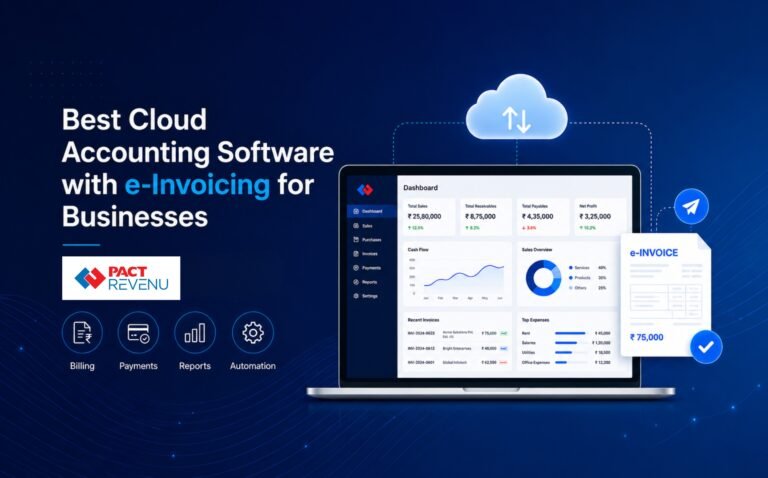
Dashboards and Business Reporting
PACT REVENU provides dashboards and reporting capabilities that help management monitor important financial and operational information.
This can reduce dependency on manually consolidated spreadsheets and provide better access to information for business decision-making.
Who Should Consider PACT REVENU?
PACT REVENU can be considered by:
- Manufacturing companies
- Wholesale distributors
- Trading companies
- Retail businesses
- Multi-branch organizations
- Multi-warehouse businesses
- Growing SMEs
- Organizations replacing disconnected systems
2. Zoho Books
Zoho Books is a cloud-based accounting platform offering capabilities for invoicing, expense management, banking workflows, and financial reporting.
It is commonly considered by startups and smaller businesses looking for accessible cloud accounting capabilities.
3. TallyPrime
TallyPrime is a recognized accounting software platform used for accounting, billing, inventory management, and financial reporting.
Businesses should evaluate local requirements, operational complexity, and integration needs when considering the platform.
4. Odoo
Odoo provides a suite of applications covering accounting, inventory, CRM, sales, purchasing, manufacturing, and other operational processes.
Businesses evaluating the platform should consider module requirements, implementation scope, customization, and integrations.
5. Sage
Sage provides accounting and financial management solutions for businesses of different sizes.
Available functionality varies across products, so businesses should evaluate their accounting, inventory, reporting, and scalability requirements before selection.
6. Oracle NetSuite
Oracle NetSuite is a cloud ERP platform designed primarily for growing mid-market and enterprise organizations.
It combines financial management with inventory, procurement, CRM, order management, and analytics capabilities.
7. Microsoft Dynamics 365 Business Central
Microsoft Dynamics 365 Business Central provides capabilities across finance, sales, purchasing, inventory, and wider operational areas.
It may be relevant for organizations already working within the Microsoft technology ecosystem.
8. Xero
Xero is a cloud accounting platform providing invoicing, bank reconciliation, expense management, reporting, and basic inventory-related capabilities.
It is commonly considered by startups and smaller businesses with relatively straightforward requirements.
9. SAP Business One
SAP Business One is an ERP solution designed for small and mid-sized organizations requiring connected management of finance, purchasing, sales, inventory, and other operational processes.
Businesses should evaluate implementation requirements based on their size and operational complexity.
10. QuickBooks
QuickBooks is a globally recognized accounting platform offering capabilities for bookkeeping, invoicing, expense management, and financial reporting.
Businesses should evaluate product capabilities, local requirements, inventory complexity, and support options before selecting a solution.
Accounting Software vs ERP Software: Which One Does Your Business Need?
The right choice depends on operational complexity.
Accounting software mainly focuses on:
- Bookkeeping
- Invoicing
- Expenses
- Receipts and payments
- Financial reporting
- Basic inventory management
ERP software connects financial management with wider operational areas, including:
- Inventory
- مبيعات
- شراء
- إدارة علاقات العملاء
- Warehouse management
- تصنيع
- Payroll
- Multiple branches
- Multiple companies
- Reporting and analytics
For companies with straightforward requirements, accounting software may be sufficient.
For growing organizations managing multiple departments, locations, and operational processes, an integrated ERP platform may provide greater long-term value.
Why Are Growing Saudi Businesses Moving Towards Integrated ERP?
Many businesses begin with basic accounting software and introduce additional applications as operational requirements grow.
Over time, the company may use separate software for inventory, CRM, payroll, warehouse management, manufacturing, and reporting.
This can create fragmented information and repetitive work.
An integrated ERP platform can help businesses achieve:
- Reduced duplicate data entry
- Better information consistency
- Improved department coordination
- Greater inventory visibility
- Faster business reporting
- Centralized business information
- Better multi-location control
- Improved scalability
PACT REVENU follows this integrated approach by connecting financial management with wider operational processes.
Frequently Asked Questions
1. What Is Accounting Software with Inventory Management?
Accounting software with inventory management connects financial accounting with stock-related processes such as purchasing, sales, inventory movement, valuation, customer balances, supplier balances, and reporting.
2. Which Accounting Software Is Best for Growing Businesses in Saudi Arabia?
The right solution depends on business size, industry, transaction volume, inventory complexity, number of locations, and future growth plans.
Businesses requiring accounting, inventory, sales, procurement, CRM, warehouse management, manufacturing, and reporting within a connected environment may consider an integrated ERP solution such as PACT REVENU.
3. Why Is Inventory Management Important for Saudi Trading Businesses?
Trading businesses need accurate visibility into product availability, stock movement, purchases, sales, and inventory value.
Connected inventory information can help businesses improve purchasing decisions and order fulfilment.
4. What Is the Difference Between Accounting Software and ERP?
Accounting software primarily manages financial processes.
ERP software connects finance with wider business functions such as inventory, sales, procurement, CRM, warehouse management, manufacturing, payroll, and reporting.
5. Can PACT REVENU Support Multi-Warehouse Businesses?
PACT REVENU provides inventory and warehouse management capabilities that can support organizations managing inventory across multiple locations.
Suitability and configuration depend on the organization’s specific operational requirements.
6. Is PACT REVENU Suitable for Growing SMEs?
PACT REVENU can be considered by growing SMEs and larger organizations that require integrated financial and operational management.
Suitability depends on business complexity, required modules, number of users, locations, and future growth plans.
Final Thoughts
Choosing the best accounting software with inventory management in Saudi Arabia is not simply about finding a tool for bookkeeping.
Growing businesses need better visibility into inventory, purchasing, sales, cash flow, customer receivables, supplier payments, warehouses, and overall financial performance.
For companies with straightforward requirements, traditional accounting software may be sufficient.
However, as operations expand across departments, warehouses, branches, and business entities, disconnected systems can create unnecessary complexity.
PACT REVENU connects accounting and financial management with inventory, sales, procurement, CRM, warehouse management, manufacturing, payroll-related processes, dashboards, and reporting.
By bringing these processes together, businesses can reduce repetitive work, improve operational visibility, and build a more scalable foundation for growth.
For organizations looking to move beyond disconnected accounting and inventory systems, PACT REVENU offers an integrated ERP approach designed to support connected and efficient business operations.
 AR
AR  EN
EN